“全球化正在改变我们论证正义的方式。”
译者按
本文选自《女性主义的命运:从国家管理型资本主义到新自由主义危机》(Fortunes of Feminism: From State-Managed Capitalism to Neoliberal Crisis,Verso,2013)第三部的第八章。全书收录作者写于 1985 至 2010 年间的十篇论文,按「国家管理型资本主义时代的女性主义反抗—身份政治时代的女性主义驯化—新自由主义危机时代的女性主义复兴」三段历史,重新梳理第二次浪潮女性主义的思想轨迹。
关于本章:弗雷泽在此把正义理论从二维推进到三维。她指出,长期以来关于正义的争论默认了「凯恩斯—威斯特伐利亚框架」:正义主张发生在领土国家的同侪公民之间,由国家来纠正。全球化动摇的正是这个框架——谁被算作正义的成员、由谁来决定,本身都成了争论对象。于是她在再分配与承认之外提出第三维:代表(政治),并区分普通—政治错误再现、错误框架与元政治错误再现三个层次,主张以后威斯特伐利亚民主正义同时追问正义的「什么」「谁」与「如何」。
接上文-女性主义的命运:从国家管理型资本主义到新自由主义危机-第七章
第三部分 女性主义复兴?面对新自由主义时代的资本主义危机
全球化世界中的正义重构
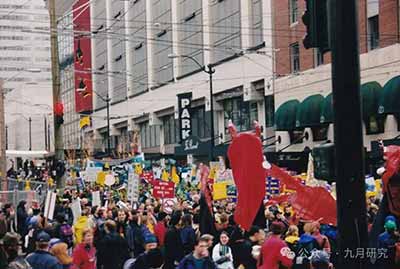
▲ 1999 年 11 月,西雅图反 WTO 抗议的游行队伍。图片来源:Wikimedia Commons(Carwil 摄,CC BY-SA 4.0)
全球化正在改变我们论证正义的方式。不久前,在社会民主主义的鼎盛时期,关于正义的争端预设了我将称之为"凯恩斯-威斯特伐利亚框架"的东西。通常在现代领土国家内展开,关于正义的论证被假定涉及同侪公民之间的关系,受制于国家公众内部的辩论,并考虑由国家国家来纠正。对于正义主张的两个主要家族——社会经济再分配主张和法律或文化承认主张——中的每一个都是如此。在布雷顿森林体系促进国家层面凯恩斯主义经济调控的时代,再分配主张通常聚焦于领土国家内部的经济不平等。呼吁国家公众舆论为了国家馅饼的公平份额,主张者寻求国家国家对国民经济的干预。同样,在仍然被威斯特伐利亚政治想象所控制的时代,它将"国内"和"国际"空间明确区分开来,承认主张通常涉及内部地位等级。呼吁国家良知以结束国家制度化的不尊重,主张者敦促国家政府取缔歧视并容纳公民之间的差异。在这两种情况下,凯恩斯-威斯特伐利亚框架都是理所当然的。无论问题涉及再分配还是承认,阶级差异还是地位等级,不言而喻的是,正义适用的单位是现代领土国家。1
可以肯定的是,总是存在例外。偶尔,饥荒和种族灭绝激发了跨国界的公众舆论。一些世界主义者和反帝国主义者寻求传播全球主义观点。2 但这些是证明规则的例外。被贬到"国际"领域,它们被纳入一个主要聚焦于安全问题而非正义问题的问题域。其效果是加强而非挑战凯恩斯-威斯特伐利亚框架。这种关于正义争端的框架从二战结束到20世纪70年代普遍默认盛行。
尽管当时没有被注意到,凯恩斯-威斯特伐利亚框架为关于社会正义的论证赋予了独特的形态。将现代领土国家视为理所当然的适当单位,将其公民视为相关主体,这种论证转向了那些公民究竟彼此欠什么。在一些人看来,公民在法律面前形式上平等就足够了;对另一些人来说,机会平等也是必需的;对还有一些人来说,正义要求所有公民都能获得他们所需的资源和尊重,以便能够与他人平等参与,成为政治共同体的完整成员。换句话说,论证聚焦于什么应该算作一个社会内部社会关系的公正秩序。参赛者全神贯注于争论正义的"什么",显然觉得没有必要争论"谁"。由于凯恩斯-威斯特伐利亚框架牢固地确立,不言而喻的是,"谁"就是国家公民。
[1]The phrase “Keynesian-Westphalian frame” is meant to signal the national-territorial underpinnings of justice disputes in the heyday of the postwar democratic welfare state, roughly 1945 through the 1970s. In this period, struggles over distribution in North America and Western Europe were premised on the assumption of state steering of national economies. And national Keynesianism, in turn, was premised on the assumption of an international state system that recognized territorial state sovereignty over domestic affairs, which included responsibility for the citizenry’s welfare. Analogous assumptions also governed disputes about recognition in this period. The term “Westphalian” refers to the Treaty of 1648, which established some key features of the international state system in question. However, I am concerned neither with the actual achievements of the Treaty nor with the centuries-long process by which the system it inaugurated evolved. Rather, I invoke “Westphalia” as a political imaginary that mapped the world as a system of mutually recognizing sovereign territorial states. My claim is that this imaginary undergirded the postwar framing of debates about justice in the First World. For the distinction between Westphalia as “event,” as “idea/ideal,” as “process of evolution,” and as “normative scoresheet,” see Richard Falk, “Revisiting Westphalia, discovering post-Westphalia,” Journal of Ethics 6:4, 2002, 311–52.
[2]It might be assumed that, from the perspective of the Third World, Westphalian premises would have appeared patently counterfactual. Yet it is worth recalling that the great majority of anti-imperialists sought to achieve independent Westphalian states of their own. In contrast, only a small minority consistently championed justice within a global frame—for reasons that are entirely understandable.
然而,今天,凯恩斯-威斯特伐利亚框架正在失去其自明性的光环。由于对全球化的更高认识,许多人观察到塑造他们生活的社会过程经常溢出领土边界。他们注意到,例如,在一个领土国家做出的决定经常影响其境外人们的生活,跨国公司、国际货币投机者和大型机构投资者的行动也是如此。许多人还注意到超国家和国际组织(包括政府和非政府组织)以及跨国公众舆论日益显著,后者通过全球大众媒体和网络技术无视边界地流动。结果是对跨国力量的新的脆弱感。面对全球变暖、艾滋病蔓延、国际恐怖主义和超级大国单边主义,许多人认为他们过上美好生活的机会至少同样取决于跨越领土国家边界的过程,而不是包含在其内部的过程。
在这些条件下,凯恩斯-威斯特伐利亚框架不再是不言而喻的。对许多人来说,现代领土国家是思考正义问题的适当单位已经不再是公理。这种国家的公民是相关主体也不能默认通过。其效果是破坏了先前政治主张表达的结构——从而改变了我们论证社会正义的方式。
对于正义主张的两个主要家族都是如此。在今天的世界,再分配主张越来越回避国民经济的假设。面对跨国化生产、工作外包以及相关的"到底线竞赛"压力,曾经以国家为中心的工会越来越多地在国外寻找盟友。与此同时,受萨帕塔主义者的启发,贫困农民和原住民将他们反对专制地方和国家当局的斗争与对跨国公司掠夺和全球新自由主义的批判联系起来。最后,WTO抗议者、占领运动和愤怒者直接瞄准全球经济的新治理结构,这些结构极大地增强了大公司和投资者逃避领土国家监管和税收权力的能力。
同样,争取承认的运动越来越多地超越领土国家。例如,在"妇女权利就是人权"的口号下,全世界的女性主义者将反对本地父权实践的斗争与改革国际法的运动联系起来。同时,在领土国家内面临歧视的宗教和民族少数群体正在将自己重建为离散群体,并建立跨国公众舆论,从中动员国际舆论。最后,人权活动家的跨国联盟致力于建立新的世界主义机构,如国际刑事法院,它们可以惩罚国家对人类尊严的侵犯。
在这种情况下,关于正义的争端正在爆炸式地突破凯恩斯-威斯特伐利亚框架。主张者不再专门向国家国家发言,也不再专门由国家公众辩论,他们不再仅仅关注同侪公民之间的关系。因此,论证的语法已经改变。无论是分配还是承认问题,过去专门聚焦于作为正义问题应该向共同体成员欠什么的争端,现在迅速变成关于谁应该算作成员以及哪个是相关共同体的争端。不仅"什么"而且"谁"都成了悬而未决的问题。
换句话说,今天,关于正义的论证呈现出双重面貌。一方面,它们涉及一阶的实质问题,就像以前一样:正义允许多少经济不平等,需要多少再分配,根据哪个分配正义原则?什么构成平等尊重,哪种差异值得公众承认,通过什么方式?但是,在这些一阶问题之上和之外,今天关于正义的论证还涉及二阶的、元层次的问题:考虑正义一阶问题的适当框架是什么?在给定案例中,谁是有权获得公正分配或相互承认的相关主体?因此,不仅正义的实质,而且框架都在争论之中。3
结果是对我们社会正义理论的重大挑战。这些理论主要专注于分配和/或承认的一阶问题,迄今未能发展出反思框架元问题的概念资源。因此,就目前情况来看,它们是否能够应对全球化时代正义问题的双重特征还远远不清楚。4
在本文中,我将提出一种思考框架问题的策略。我将首先论证,为了令人满意地处理这个问题,正义理论必须变成三维的,将政治再现维度与分配的经济维度和承认的文化维度结合起来。我还将其次论证,再现的政治维度本身应该被理解为涵盖三个层次。这两个论证的综合效果将是使第三个问题显现出来,超越"什么"和"谁"的问题,我将称之为"如何"的问题。这个问题反过来开创了一个范式转变:凯恩斯-威斯特伐利亚框架所设想的社会正义理论现在必须变成后威斯特伐利亚民主正义理论。
[3]This situation is by no means unprecedented. Even the most cursory reflection discloses historical parallels—for example, the period leading up to the Treaty of Westphalia and the period following World War I. In these moments, too, not just the substance of justice but also the frame was up for grabs.
[4]On the elision of the problem of the frame in mainstream theories of justice, see Nancy Fraser, “Democratic Justice in a Globalizing Age: Thematizing the Problem of the Frame,” in Varieties of World-Making: Beyond Globalization , eds. Nathalie Karagiannis and Peter Wagner, Liverpool: Liverpool University Press, 2006, 193–215.
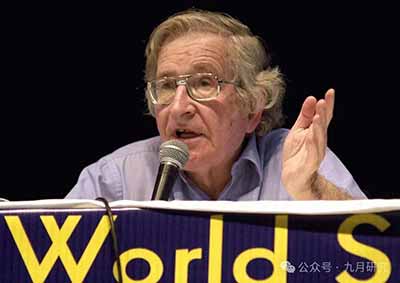
▲ 诺姆·乔姆斯基在世界社会论坛,2003 年。图片来源:Wikimedia Commons(Marcello Casal Jr/Agência Brasil,CC BY 3.0 br)
一、为三维正义理论而辩:论政治的特殊性
让我首先解释我一般所说的正义是什么意思,特别是其政治维度是什么意思。在我看来,正义最一般的含义是参与平等。根据这种对平等道德价值原则的激进民主解释,正义要求社会安排允许所有人作为同侪参与社会生活。克服不正义意味着拆除制度化的障碍,这些障碍阻止一些人作为社会互动的完整伙伴与他人平等参与。以前,我分析了参与平等的两种不同类型的障碍,它们对应于两种不同类型的不正义。5 一方面,人们可能被经济结构阻碍充分参与,这些结构否认他们作为同侪与他人互动所需的资源;在这种情况下,他们遭受分配不正义或分配不当。另一方面,人们也可能被制度化的文化价值等级阻止以平等条件互动,这些等级否认他们必要的地位;在这种情况下,他们遭受地位不平等或错误承认。6 在第一种情况下,问题是社会的阶级结构,它对应于正义的经济维度。在第二种情况下,问题是地位秩序,它对应于文化维度。7 在现代资本主义社会中,阶级结构和地位秩序并不整齐地相互镜像,尽管它们因果地相互作用。相反,每个都有相对于另一个的某种自主性。结果,错误承认不能被还原为分配不当的次要效果,正如一些经济主义分配正义理论似乎假设的那样。相反,分配不当也不能被还原为错误承认的附带现象表达,正如一些文化主义承认理论倾向于假设的那样。因此,单独的承认理论或单独的分配理论都不能为资本主义社会提供充分的正义理解。只有一个二维理论,同时涵盖分配和承认,才能提供必要水平的社会理论复杂性和道德哲学洞见。8
至少,这是我过去捍卫的正义观点。这种对正义的二维理解在我看来仍然是正确的。但我现在认为它走得不够远。分配和承认看起来构成正义的唯一维度,只是在凯恩斯-威斯特伐利亚框架被视为理所当然的范围内。然而,一旦框架问题成为争论的对象,其效果是使正义的第三个维度显现出来,这个维度在我以前的工作中——以及在许多其他哲学家的工作中——被忽视了。9
正义的第三个维度是政治的。当然,分配和承认本身在被争论和充满权力的意义上就是政治的;它们通常被视为需要国家裁决。但我指的是一种更具体的、构成性的政治意义,它涉及国家管辖权的构成和它构建争论的决策规则。这种意义上的政治提供了舞台,在其上分配和承认的斗争得以展开。通过确立社会归属的标准,从而确定谁算作成员,正义的政治维度规定了其他那些维度的范围:它告诉我们谁被包括在有权获得公正分配和相互承认的圈子内,谁被排除在外。通过确立决策规则,政治维度同样设定了在经济和文化维度中发起和解决争端的程序:它不仅告诉我们谁可以提出再分配和承认的主张,而且告诉我们这种主张应该如何提出和裁决。
[5]See Chapters 6 and 7 of this volume, “Feminist Politics in the Age of Recognition” and “Heterosexism, Misrecognition, and Capitalism.” Also, Nancy Fraser, “Social Justice in the Age of Identity Politics: Redistribution, Recognition, and Participation,” in Nancy Fraser and Axel Honneth, Redistribution or Recognition? A Political-Philosophical Exchange , trans. J. Golb, J. Ingram, and C. Wilke, London: Verso Books, 2003.
[6]This status model of recognition represents an alternative to the standard identity model. For a critique of the latter and a defense of the former, see Chapter 6 of this volume, “Feminist Politics in the Age of Recognition.” See also Nancy Fraser, “Rethinking Recognition: Overcoming Displacement and Reification in Cultural Politics,” New Left Review 3, 2000, 107–20.
[7]Here I assume quasi-Weberian conceptions of class and status. See Max Weber, “Class, Status, Party,” in From Max Weber: Essays in Sociology , eds. Hans H. Gerth and C. Wright Mills, Oxford: Oxford University Press, 1958.
[8]For the full argument, see Fraser, “Social Justice in the Age of Identity Politics.”
[9]The neglect of the political is especially glaring in the case of theorists of justice who subscribe to liberal or communitarian philosophical premises. In contrast, deliberative democrats, agonistic democrats, and republicans have sought to theorize the political. But most of these theorists have had relatively little to say about the relation between democracy and justice; and none has conceptualized the political as one of three dimensions of justice. Deliberative democratic accounts of the political include Jürgen Habermas, Between Facts and Norms: Contributions to a Discourse Theory of Law and Democracy , Cambridge, MA: MIT Press, 1996; and Amy Gutmann and Dennis Thompson, Democracy and Disagreement , Cambridge: Belknap Press, 1996. Agonistic accounts of the political include William Connolly, Identity/Difference: Negotiations of Political Paradox , Ithaca: Cornell University Press, 1991; Bonnie Honig, Political Theory and the Displacement of Politics , Ithaca: Cornell University Press, 1993; Chantal Mouffe, The Return of the Political , London: Verso Books, 1993; and James Tully, Strange Multiplicity: Constitutionalism in an Age of Diversity , Cambridge: Cambridge University Press, 1995. Republican accounts of the political include Quentin Skinner, “The Republican Ideal of Political Liberty,” in Machiavelli and Republicanism , eds. Gisela Bock, Quentin Skinner, and Maurizio Viroli, Cambridge: Cambridge University Press, 1990; and Philip Pettit, “Freedom as Antipower,” Ethics 106:3, 1996, 576–604. In contrast to these thinkers, a handful of others have linked the political directly to justice, although not in the way I do here. See, for example, Michael Walzer, Spheres of Justice , New York: Basic Books, 1983; Iris Marion Young, Justice and the Politics of Difference , Princeton, NJ: Princeton University Press, 1990; Amartya Sen, Development as Freedom , New York: Anchor Books, 1999; and Seyla Benhabib, The Rights of Others: Aliens, Residents, and Citizens , Cambridge: Cambridge University Press, 2004.
以成员资格和程序问题为中心,正义的政治维度主要关注再现。在一个层面上,它涉及政治的边界设定方面,再现是社会归属的问题;这里的关键是被包括在有权相互提出正义主张的共同体中,还是被排除在外。在另一个层面上,它涉及决策规则方面,再现关注构建公共争论过程的程序。这里的关键是被包括在政治共同体中的人发表主张和裁决争端的条件。10 在两个层面上,都可能出现关于再现关系是否正义的问题。人们可以问:政治共同体的边界是否错误地排除了一些实际上有权获得再现的人?共同体的决策规则是否在公共审议中给予所有成员平等的发言权,在公共决策中给予公平的代表权?这种再现问题是特殊的政治问题。在概念上不同于经济和文化问题,它们不能被还原为后者,尽管,正如我们将看到的,它们与后者密不可分地交织在一起。
说政治是一个概念上不同的正义维度,不能还原为经济或文化,也就是说它可以产生一种概念上不同的不正义类型。鉴于将正义视为参与平等的观点,这意味着存在对平等的独特政治障碍,不能还原为分配不当或错误承认,尽管(再次)与它们交织在一起。这种障碍产生于社会的政治构成,而不是阶级结构或地位秩序。植根于一种特殊的社会秩序政治模式,它们只能通过一种将再现与分配和承认一起概念化为正义三个基本维度之一的理论来充分把握。
[10]Classic works on representation have dealt largely with what I am calling the decision-rule aspect, while ignoring the membership aspect. See, for example, Hannah Fenichel Pitkin, The Concept of Representation , Berkeley: University of California Press, 1967; and Bernard Manin, The Principles of Representative Government , Cambridge: Cambridge University Press, 1997. Works that do treat the membership aspect include Walzer, Spheres of Justice , and Benhabib, The Rights of Others . However, both Walzer and Benhabib arrive at conclusions that differ from the ones I draw here.
如果再现是政治的决定性问题,那么典型的政治不正义就是错误再现。当政治边界和/或决策规则的功能是错误地否认一些人在社会互动中与他人平等参与的可能性时,就发生了错误再现——包括但不仅限于政治舞台。错误再现远非可以还原为分配不当或错误承认,即使在后两种不正义缺失的情况下也可能发生,尽管它通常与它们交织在一起。
我们可以区分至少两种不同层次的错误再现。就政治决策规则错误地否认一些被包括者充分参与的机会(作为同侪)而言,这种不正义就是我所说的普通-政治错误再现。在这里,问题是框架内再现,我们进入了熟悉的政治科学辩论领域,关于替代选举制度的相对优点。单一选区、赢者通吃、相对多数制度是否不公正地否认了数字少数群体的平等?如果是,比例代表制或累积投票是否是适当的补救?11 同样,性别盲规则与基于性别的分配不当和错误承认结合,是否起到了否认女性政治参与平等的作用?如果是,性别配额是否是适当的补救?12 这种问题属于普通-政治正义领域,它通常在凯恩斯-威斯特伐利亚框架内展开。
也许不太明显的是错误再现的第二个层次,它涉及政治的边界设定方面。在这里,当共同体边界以这样一种方式划定,即错误地将一些人完全排除在参与其授权的正义争端之外的机会时,就产生了不正义。在这种情况下,错误再现采取了更深的形式,我将称之为错误框架。错误框架的更深特征是框架对每个社会正义问题至关重要的功能。远非边缘重要,框架设定是政治决策中最有影响的。通过一举构成成员和非成员,这个决策实际上将后者排除在在分配、承认和普通-政治再现事务中共同体有权考虑的范围之外。结果可能是严重的不正义。当正义问题以错误排除一些人考虑的方式被框架化时,结果是一种特殊的元不正义,其中一个人被否认在给定政治共同体中提出一阶正义主张的机会。此外,即使那些被一个政治共同体排除的人作为另一个共同体中的正义主体被包括进来,不正义仍然存在——只要政治划分的效果是将一些相关正义方面置于他们的触及范围之外。当然,更严重的是一个人被排除在任何政治共同体成员资格之外的情况。类似于汉娜·阿伦特所谓的"拥有权利的权利"的丧失,那种错误框架是一种"政治死亡"。13 遭受它的人可能成为慈善或善意的对象。但被剥夺了提出一阶主张的可能性,他们在正义方面成为非人物。
正是全球化最近开始使之显现的错误再现的错误框架形式。早些时候,在战后福利国家的鼎盛时期,凯恩斯-威斯特伐利亚框架牢固确立,思考正义的主要关切是分配。后来,随着新社会运动和多元文化主义的兴起,重心转向了承认。在这两种情况下,现代领土国家都被默认假设。结果,正义的政治维度被贬到边缘。在它确实出现的地方,它采取了关于政体内部决策规则的普通-政治争端形式,其边界被视为理所当然。因此,性别配额和多元文化权利的主张寻求消除对那些原则上已被包括在政治共同体中的人的参与平等的政治障碍。14 将凯恩斯-威斯特伐利亚框架视为理所当然,它们没有质疑正义的适当单位是领土国家的假设。
相反,今天,全球化将框架问题直接提上了政治议程。越来越多的争论,凯恩斯-威斯特伐利亚框架现在被许多人认为是不正义的主要工具,因为它以这样的方式划分政治空间,即阻止许多贫困和被蔑视的人挑战压迫他们的力量。通过将他们的主张引导到相对无权(如果不是完全失败)国家的国内政治空间,这个框架将离岸权力隔离在批判和控制之外。15 在那些被正义触及范围保护的人当中,有更强大的掠夺性国家和跨国私人权力,包括外国投资者和债权人、国际货币投机者和跨国公司。16 同样受保护的是全球经济的治理结构,它们设定剥削性的互动条件,然后免除它们的民主控制。17 最后,凯恩斯-威斯特伐利亚框架是自我绝缘的;国家间体系的架构保护了它所制度化的政治空间划分本身,实际上排除了关于正义问题的跨国民主决策。18
从这个角度来看,凯恩斯-威斯特伐利亚框架是一个强大的不正义工具,它以牺牲穷人和被蔑视者为代价来操纵政治空间。对于那些被否认提出跨国一阶主张机会的人来说,反对分配不当和错误承认的斗争无法进行,更不用说成功了,除非它们与反对错误框架的斗争结合起来。因此,一些人认为错误框架是全球化时代的决定性不正义并不奇怪。
[11]Lani Guinier, The Tyranny of the Majority , New York: Free Press, 1994. Robert Ritchie and Steven Hill, “The Case for Proportional Representation,” in Whose Vote Counts? eds. Robert Ritchie and Steven Hill, Boston: Beacon Press, 2001, 1–33.
[12]Anne Phillips, The Politics of Presence , Oxford: Clarendon Press, 1995. Shirin M. Rai, “Political Representation, Democratic Institutions and Women’s Empowerment: The Quota Debate in India,” in Rethinking Empowerment: Gender and Development in a Global/Local World , eds. Jane L. Parpart, Shirin M. Rai, and Kathleen Staudt , New York: Routledge, 2002, 133–45. T. Gray, “Electoral Gender Quotas: Lessons from Argentina and Chile,” Bulletin of Latin American Research 21:1, 2003, 52–78. Mala Htun, “Is Gender Like Ethnicity? The Political Representation of Identity Groups,” Perspectives on Politics 2:3, 2004, 439–58.
[13]Hannah Arendt, The Origins of Totalitarianism , New York: Harcourt Brace, 1973, 269–84. “Political death” is my phrase, not Arendt’s.
[14]Among the best accounts of the normative force of these struggles are Will Kymlicka, Multicultural Citizenship: A Liberal Theory of Minority Rights , London: Oxford University Press, 1995; and Melissa Williams, Voice, Trust, and Memory: Marginalized Groups and the Failings of Liberal Representation , Princeton, NJ: Princeton University Press, 1998.
[15]Thomas W. Pogge, “The Influence of the Global Order on the Prospects for Genuine Democracy in the Developing Countries,” Ratio Juris 14:3, 2001, 326–43, and “Economic Justice and National Borders,” Revision 22:2, 1999, 27–34. Rainer Forst, “Towards a Critical Theory of Transnational Justice,” in Global Justice , ed. Thomas Pogge, Oxford: Blackwell Publishers, 2001, 169–87, and “Justice, Morality and Power in the Global Context,” in Real World Justice , eds. Andreas Follesdal and Thomas Pogge, Dordrecht: Springer, 2005.
[16]Richard L. Harris and Melinda J. Seid, Critical Perspectives on Globalization and Neoliberalism in the Developing Countries , Boston: Leiden, 2000.
[17]Robert W. Cox, “A Perspective on Globalization,” in Globalization: Critical Reflections , ed. James H. Mittelman, Boulder, CO: Lynne Rienner, 1996, 21–30; and “Democracy in Hard Times: Economic Globalization and the Limits to Liberal Democracy,” in The Transformation of Democracy? ed. Anthony McGrew, Cambridge: Polity Press, 1997, 49–72. Stephen Gill, “New Constitutionalism, Democratisation and Global Political Economy,” Pacifica Review 10:1, February 1998, 23–38. Eric Helleiner, “From Bretton Woods to Global Finance: A World Turned Upside Down,” in Political Economy and the Changing Global Order , eds. Richard Stubbs and Geoffrey R. D. Underhill, New York: St. Martin’s Press, 1994, 163–75. Servaes Storm and J. Mohan Rao, “Market-Led Globalization and World Democracy: Can the Twain Ever Meet?” Development and Change 35:5, 2004, 567–81. James K. Boyce, “Democratizing Global Economic Governance,” Development and Change 35:3, 2004, 593–99.
[18]John Dryzek, “Transnational Democracy” Journal of Political Philosophy 7:1, 1999, 30–51. James Bohman, “International Regimes and Democratic Governance,” International Affairs 75:3, 1999, 499–513. David Held, “Regulating Globalization?” International Journal of Sociology 15:2, 2000, 394–408; Democracy and the Global Order: From the Modern State to Cosmopolitan Governance , Cambridge: Polity Press, 1995, 99–140; “The Transformation of Political Community: Rethinking Democracy in the Context of Globalization,” in Democracy’s Edges , eds. Ian Shapiro and Cassiano Hacker-Cordón, Cambridge: Cambridge University Press, 1999, 84–111.
在这种对错误框架高度认识的条件下,正义的政治维度很难被忽视。就全球化正在使框架问题政治化而言,它也正在使前一时期经常被忽视的正义语法的一个方面显现出来。现在很明显,没有任何正义主张能够避免预设某种再现概念,无论是隐含的还是明确的,因为没有任何主张能够避免假设一个框架。因此,再现总是已经内在于所有再分配和承认主张中。政治维度是隐含在正义概念语法中的,实际上是被它所要求的。因此,没有再现就没有再分配或承认。19
因此,总的来说,我们时代充分的正义理论必须是三维的。不仅涵盖再分配和承认,还涵盖再现,它必须使我们能够将框架问题把握为一个正义问题。纳入经济、文化和政治维度,它必须使我们能够识别错误框架的不正义并评估可能的补救。最重要的是,它必须允许我们提出和回答我们时代的关键政治问题:我们如何能够将反对分配不当、错误承认和错误再现的斗争整合在后威斯特伐利亚框架内?
[19]I do not mean to suggest that the political is the master dimension of justice, more fundamental than the economic and the cultural. Rather, the three dimensions stand in relations of mutual entwinement and reciprocal influence. Just as the ability to make claims for distribution and recognition depends on relations of representation, so the ability to exercise one’s political voice depends on the relations of class and status. In other words, the capacity to influence public debate and authoritative decision-making depends not only on formal decision rules but also on power relations rooted in the economic structure and the status order, a fact that is insufficiently stressed in most theories of deliberative democracy. Thus, maldistribution and misrecognition conspire to subvert the principle of equal political voice for every citizen, even in polities that claim to be democratic. But of course the converse is also true. Those who suffer from misrepresentation are vulnerable to injustices of status and class. Lacking political voice, they are unable to articulate and defend their interests with respect to distribution and recognition, which in turn exacerbates their misrepresentation. In such cases, the result is a vicious circle in which the three orders of injustice reinforce one another, denying some people the chance to participate on a par with others in social life. In general, then, the political is not the master dimension. On the contrary, although they are conceptually distinct and mutually irreducible, the three sorts of obstacles to parity of participation are usually intertwined. It follows that efforts to overcome injustice cannot, except in rare cases, address themselves to one such dimension alone. Rather, struggles against maldistribution and misrecognition cannot succeed unless they are joined with struggles against misrepresentation—and vice-versa. Where one puts the emphasis, of course, is both a tactical and strategic decision. Given the current salience of injustices of misframing, my own preference is for the slogan, “No redistribution or recognition without representation.” But even so, the politics of representation appears as one among three interconnected fronts in the struggle for social justice in a globalizing world. For an argument against Rainer Forst’s tendency to accord primacy to the political dimension, see Nancy Fraser, “Identity, Exclusion, and Critique: A Response to Four Critics,” European Journal of Political Theory 6:3, 2007, 305–38; revised and reprinted as “Prioritizing Justice as Participatory Parity: A Rely to Kompridis and Forst,” in Adding Insult to Injury: Nancy Fraser Debates Her Critics , ed. Kevin Olson, London: Verso Books, 2008.
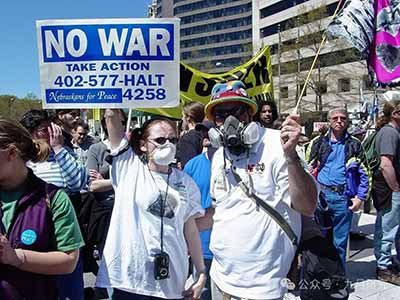
▲ 2003 年 4 月 12 日,华盛顿反战示威。图片来源:Wikimedia Commons(Ben Schumin 摄,CC BY-SA 2.0)
二、论框架政治:从国家-领土性到社会有效性?
到目前为止,我一直在论证政治作为正义三个基本维度之一的不可还原特殊性。我已经识别了两个不同层次的政治不正义:普通-政治错误再现和错误框架。现在,我想考察全球化世界中的框架政治。区分肯定性方法和转型性方法,我将论证,一种充分的再现政治还必须处理第三个层次:一方面超越争论普通-政治错误再现,另一方面超越错误框架,这种政治还必须旨在使框架设定过程民主化。
我首先解释我所说的"框架政治"是什么意思。位于我的第二个层次,即成员和非成员的区分被划定的地方,这种政治涉及政治的边界设定方面。聚焦于谁算作正义主体以及什么是适当框架的问题,框架政治包括建立和巩固、争论和修订政治空间权威划分的努力。这里包括反对错误框架的斗争,其目的是拆除阻止弱势者用正义主张面对压迫他们力量的障碍。以框架的设定和争论为中心,框架政治关注"谁"的问题。
框架政治可以采取两种不同的形式,这两种形式现在都在我们的全球化世界中实践。20 第一种方法,我将称之为肯定性框架政治,在接受威斯特伐利亚框架设定语法的同时争论现有框架的边界。在这种政治中,那些声称遭受错误框架不正义的人寻求重新划定现有领土国家的边界,或者在某些情况下创建新的边界。但他们仍然假设领土国家是提出和解决关于正义争端的适当单位。因此,对他们来说,错误框架的不正义不是威斯特伐利亚秩序划分政治空间的一般原则的功能。相反,它们是该原则被错误应用的结果。因此,那些实践肯定性框架政治的人接受国家-领土性原则是构成正义"谁"的适当基础。换句话说,他们同意,使给定个体集合成为同侪正义主体的是他们在现代国家领土上的共同居住和/或他们在对应于这种国家的政治共同体中的共同成员资格。因此,远非挑战威斯特伐利亚秩序的深层语法,那些实践肯定性框架政治的人接受其国家-领土原则。21
然而,正是那个原则在框架政治的第二个版本中受到挑战,我将称之为转型方法。对于这种方法的支持者来说,国家-领土原则不再为在每个案例中决定正义的"谁"提供充分基础。他们当然承认,那个原则对许多目的仍然相关;因此,转型的支持者并不提议完全消除国家-领土性。但他们认为,其语法与全球化世界中许多不正义的结构原因不同步,这些原因在性质上不是领土的。例子包括决定谁挣工资谁不挣的全球经济的金融市场、"离岸工厂"、投资制度和治理结构;决定谁被包括在交流权力回路中谁不被包括的全球媒体和网络技术的信息网络;以及决定谁长寿谁早死的气候、疾病、毒品、武器和生物技术的生命政治。在这些对人类福祉如此根本的事务中,犯下不正义的力量不属于"地方空间",而属于"流的空间"。22 无法定位在任何实际或可设想的领土国家的管辖权内,它们不能被要求对以国家-领土原则框架化的正义主张负责。在它们的案例中,论证认为,援引国家-领土原则来决定框架本身就是犯下不正义。通过沿领土线划分政治空间,这个原则将额外和非领土权力隔离在正义的触及范围之外。因此,在全球化世界中,它不太可能作为错误框架的补救,而是作为造成或延续它的手段。
因此,总的来说,转型性框架政治旨在改变全球化世界中框架设定的深层语法。这种方法寻求用一个或多个后威斯特伐利亚原则来补充威斯特伐利亚秩序的国家-领土原则。其目的是通过改变不仅是正义"谁"的边界,而且是它们构成的模式,从而改变它们被划定的方式,来克服错误框架的不正义。23
后威斯特伐利亚框架设定模式会是什么样子?毫无疑问,现在有一个清晰的观点还为时过早。然而,迄今为止最有前途的候选者是"所有受影响者原则"。这个原则认为,所有受给定社会结构或制度影响的人都具有相对于它的正义主体道德地位。在这种观点上,将一群人变成同侪正义主体的不是地理接近,而是他们在一个共同结构或制度框架中的共同交织,这个框架设定了治理他们社会互动的基本规则,从而以优势和劣势模式塑造他们各自的生活可能性。24
直到最近,所有受影响者原则在许多人眼中似乎与国家-领土原则重合。按照威斯特伐利亚世界图景,人们假设决定优势和劣势模式的共同框架恰恰是现代领土国家的宪政秩序。结果,似乎在应用国家-领土原则时,人们同时把握了所有受影响者原则的规范力量。事实上,这从来都不是真正如此,正如殖民主义和新殖民主义的漫长历史所证明的。然而,从大都市的角度来看,国家-领土性与社会有效性的混淆似乎具有解放的冲击力,因为它有助于证明逐步将那些居住在领土上但被排除在积极公民资格之外的从属阶级和地位群体作为正义主体纳入是正当的。
[20]In distinguishing “affirmative” from “transformative” approaches, I am adapting terminology I have used in the past with respect to redistribution and recognition. See Nancy Fraser, “From Redistribution to Recognition? Dilemmas of Justice in a ‘Postsocialist’ Age,” New Left Review 212, 1995, 68–93, and “Social Justice in the Age of Identity Politics.”
[21]For the state-territorial principle, see Thomas Baldwin, “The Territorial State,” in Jurisprudence, Cambridge Essays , eds. H. Gross and T. R. Harrison, Oxford: Clarendon Press, 1992, 207–30. For doubts about the state-territorial principle (among other principles), see Frederick Whelan, “Democratic Theory and the Boundary Problem,” in Nomos XXV: Liberal Democracy , eds. J. R. Pennock and R. W. Chapman, New York and London: New York University Press, 1983, 13–47.
[22]I borrow this terminology from Manuel Castells, The Rise of the Network Society , London: Blackwell Publishers, 1996, 440–60.
[23]I owe the idea of a post-territorial “mode of political differentiation” to John G. Ruggie. See his immensely suggestive essay, “Territoriality and Beyond: Problematizing Modernity in International Relations,” International Organization 47, 1993, 139–74. Also suggestive in this regard is Raul C. Pangalangan, “Territorial Sovereignty: Command, Title, and Expanding the Claims of the Commons,” in Boundaries and Justice: Diverse Ethical Perspectives , eds. David Miller and Sohail H. Hashmi, Princeton, NJ: Princeton University Press, 2001, 164–82.
[24]Thinking develops in time, often in unanticipated ways. The present chapter, which dates from 2004–5, reflects my view at that time that the all-affected principle was the most promising candidate on offer for a post-Westphalian mode of frame-setting, even though I also register important worries about that principle in note 26 below. Soon thereafter, however, those worries came to seem insurmountable. In later writings, I rejected the all-affected principle in favor of another possibility, not considered here, which refers disputes about the frame to the “all-subjected principle.” This “subjection” principle now seems to me to better capture the deep internal connection between the concepts of justice and democracy. But I have elected to forego post hoc revision of this chapter. For the all-subjected principle, see Nancy Fraser, “Abnormal Justice,” Critical Inquiry 34:3, 2008, 393–422; reprinted in Nancy Fraser, Sclaes of Justice: Reimagining Political Space in a Globalizing World , New York: Columbia University Press and Polity Press, 2008.
然而,今天,国家-领土性可以作为社会有效性代理的想法不再合理。在当前条件下,一个人过上美好生活的机会并不完全取决于他所居住的领土国家的内部政治构成。尽管后者仍然不可否认地相关,但其影响被其他结构中介,包括额外和非领土的结构,其影响至少同样显著。25 总的来说,全球化正在国家领土性和社会有效性之间楔入一个越来越宽的楔子。随着这两个原则日益分化,其效果是揭示前者作为后者的不充分替代。因此,问题出现了:是否可能直接将所有受影响者原则应用于正义的框架,而不经过国家-领土性的弯路?26
这正是一些转型政治的实践者试图做的。寻求反对分配不当和错误承认的离岸来源的杠杆,一些全球化活动家直接诉诸所有受影响者原则,以绕开政治空间的国家-领土划分。争论他们被凯恩斯-威斯特伐利亚框架排除,环保主义者和原住民正在主张作为正义主体的地位,相对于影响他们生活的额外和非领土权力。坚持有效性胜过国家-领土性,他们与发展活动家、国际女性主义者和其他人一起主张他们有权对伤害他们的结构提出主张,即使后者无法定位在地方空间中。摆脱威斯特伐利亚框架设定语法,这些主张者正在将所有受影响者原则直接应用于全球化世界中的正义问题。27
在这种情况下,转型性框架政治同时在多个维度和多个层面展开。28 在一个层面上,实践这种政治的社会运动旨在纠正分配不当、错误承认和普通-政治错误再现的一阶不正义。在第二个层面上,这些运动寻求通过重建正义的"谁"来纠正元层次的框架不正义。此外,在那些国家-领土原则更多是用于赔偿而非挑战不正义的情况下,转型社会运动转而诉诸所有受影响者原则。援引后威斯特伐利亚原则,它们正在寻求改变框架设定本身的语法——从而为全球化世界重建正义的元政治基础。
但是转型政治的主张走得更远。在其其他主张之上和之外,这些运动还要求在相当于一个新的、后威斯特伐利亚框架设定过程中拥有发言权。拒绝标准观点(该观点认为框架设定是国家和跨国精英的特权),它们实际上旨在民主化正义框架被划定和修订的过程。主张他们参与构成正义"谁"的权利,他们同时正在改变"如何"——我指的是确定"谁"的公认程序。29 在其最反思和最有抱负的时刻,转型运动要求创建新的民主舞台来讨论关于框架的论证。在某些情况下,它们正在自己创建这样的舞台。例如,在世界社会论坛中,一些转型政治的实践者已经打造了一个跨国公共领域,在其中他们可以与他人平等参与讨论和解决关于框架的争端。30 通过这种方式,它们正在预构后威斯特伐利亚民主正义新制度的可能性。31
转型政治的民主化维度指向政治不正义的第三个层次,超越已经讨论过的两个。以前,我区分了普通-政治错误再现的一阶不正义和错误框架的二阶不正义。然而,现在我们可以辨别第三阶政治不正义,它对应于"如何"的问题。以不民主的框架设定过程为范例,这种不正义在于未能在元政治层面上,在关于"谁"的审议和决策中,将参与平等制度化。因为这里的关键是一阶政治空间被构成的过程,我将这种不正义称为元政治错误再现。当国家和跨国精英垄断框架设定活动,拒绝在过程中可能受到伤害的人发言权,并阻止创建可以审查和纠正后者主张的民主论坛时,就产生了元政治错误再现。其效果是将绝大多数人排除在决定政治空间权威划分的元话语之外。缺乏任何这种参与的制度舞台,并服从于一种不民主的"如何"方法,大多数人被否认在关于"谁"的决策中以平等条件参与的机会。
[25]Thomas W. Pogge, World and Poverty and Human Rights: Cosmopolitan Responsibilities and Reforms , Cambridge: Polity Press, 2002, especially the sections on “The Causal Role of Global Institutions in the Persistence of Severe Poverty,” 112–16, and “Explanatory Nationalism: The Deep Significance of National Borders,” 139–44.
[26]Everything depends on finding a suitable interpretation of the all-affected principle. The key issue is how to narrow the idea of “affectedness” to the point that it becomes a viable operationalizable standard for assessing the justice of various frames. The problem is that, given the so-called butterfly effect, one can adduce evidence that just about everyone is affected by just about everything. What is needed, therefore, is a way of distinguishing those levels and kinds of effectivity that are sufficient to confer moral standing from those that are not. One proposal, suggested by Carol Gould, is to limit such standing to those whose human rights are violated by a given practice or institution. Another proposal, suggested by David Held, is to accord standing to those whose life expectancy and life chances are significantly affected. My own view is that the all-affected principle is open to a plurality of reasonable interpretations. As a result, its interpretation cannot be determined monologically, by philosophical fiat. Rather, philosophical analyses of affectedness should be understood as contributions to a broader public debate about the principle’s meaning. (The same is true for empirical social-scientific accounts of who is affected by given institutions or policies.) In general, the all-affected principle must be interpreted dialogically, through the give-and-take of argument in democratic deliberation. That said, however, one thing is clear. Injustices of misframing can be avoided only if moral standing is not limited to those who are already accredited as official members of a given institution or as authorized participants in a given practice. To avoid such injustices, standing must also be accorded to those non-members and non-participants significantly affected by the institution or practice at issue. Thus, sub-Saharan Africans, who have been involuntarily disconnected from the global economy, count as subjects of justice in relation to it, even if they do not participate officially in it. For the human-rights interpretation, see Carol C. Gould, Globalizing Democracy and Human Rights , Cambridge: Cambridge University Press, 2004. For the life expectancy and life-chances interpretation, see David Held, Global Covenant: The Social Democratic Alternative to the Washington Consensus , Cambridge: Polity Press, 2004, 99ff. For the dialogical approach, see below, as well as Fraser, “Democratic Justice in a Globalizing Age” and “Abnormal Justice,” Critical Inquiry 34:3, 2008, 393–422. For the involuntary disconnection of sub-Saharan Africa from the official global economy, see James Ferguson, “Global Disconnect: Abjection and the Aftermath of Modernism,” in Ferguson, Expectations of Modernity: Myths and Meanings of Urban Life on the Zambian Copperbelt , Berkeley: University of California Press, 1999, 234–54.
[27]Manuel Castells, The Power of Identity , London: Blackwell Publishers, 1996. John A. Guidry, Michael D. Kennedy, and Mayer N. Zald, Globalizations and Social Movements , Ann Arbor: University of Michigan Press, 2000. Sanjeev Khagram, Kathryn Sikkink, and James V. Riker, Restructuring World Politics: Transnational Social Movements, Networks, and Norms , Minneapolis: Univeristy of Minnesota Press, 2002. Margaret E. Keck and Kathryn Sikkink, Activists beyond Borders: Advocacy Networks in International Politics , Ithaca, NY: Cornell University Press, 1998. Jeffrey St. Clair, “Seattle Diary,” December 16, 1999, counterpunch.org.
[28]For a useful account, albeit one that differs from the one presented here, see Christine Chin and James H. Mittelman, “Conceptualizing Resistance to Globalisation,” New Political Economy 2:1, 1997, 25–37.
[29]For further discussion of the “how” of justice, see Fraser, “Democratic Justice in a Globalizing Age” and “Abnormal Justice.”
[30]James Bohman, “The Globalization of the Public Sphere: Cosmopolitanism, Publicity and Cultural Pluralism,” Modern Schoolman 75:2, 1998, 101–17. John A. Guidry, Michael D. Kennedy, and Mayer N. Zald, Globalizations and Social Movements . Thomas Pomiah, “Democracy vs. Empire: Alternatives to Globalization Presented at the World Social Forum,” Antipode 36:1, 2004, 130–33. Maria Pia Lara, “Globalizing Women’s Rights: Building a Public Sphere,” in Recognition, Responsibility, and Rights: Feminist Ethics and Social Theory. Feminist Reconstructions , eds. Robin N. Fiore and Hilde Lindemann Nelson, Totowa, NJ: Rowman & Littlefield, 2003, 181–93. Nancy Fraser, “Transnationalizing the Public Sphere: On the Legitimacy and Efficacy of Public Opinion in a Postwestphalian World,” Theory, Culture & Society 24:4, 2007, 7-30; reprinted in Fraser, Scales of Justice .
[31]For the time being, efforts to democratize the process of frame-setting are confined to contestation in transnational civil society. Indispensable as this level is, it cannot succeed so long as there exist no formal institutions that can translate transnational public opinion into binding, enforceable decisions. In general, then, the civil-society track of transnational democratic politics needs to be complemented by a formal-institutional track. For further discussion of this problem, see Fraser, “Democratic Justice in a Globalizing Age” and “Abnormal Justice.” Also James Bohman, “International Regimes and Democratic Governance.”
因此,总的来说,反对错误框架的斗争正在揭示一种新的民主赤字。正如全球化已经使错误框架的不正义显现出来,反对新自由主义全球化的转型斗争也正在使元政治错误再现的不正义显现出来。暴露缺乏可以民主地讨论和解决关于"谁"争端的制度,这些斗争正将注意力集中在"如何"上。通过证明这种制度的缺失阻碍了克服不正义的努力,它们正在揭示民主和正义之间深刻的内在联系。其效果是揭示了当前局势的一个结构特征:全球化世界中的正义斗争除非与元政治民主的斗争携手并进,否则不可能成功。因此,在这个层面上也是如此,没有再现就没有再分配或承认。
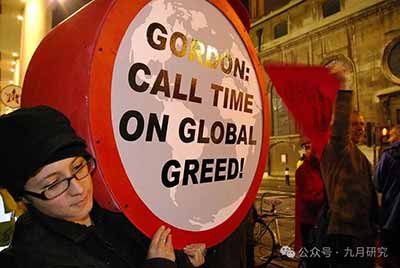
▲ 2008 年,伦敦“反对全球贪婪”抗议。图片来源:Wikimedia Commons(Peter Taylor 摄,CC BY 2.0)
三、范式转变:后威斯特伐利亚民主正义
我一直在论证,当前局势的独特之处在于关于正义的"谁"和"如何"的激烈争论。在这些条件下,正义理论正在经历范式转变。早些时候,当凯恩斯-威斯特伐利亚框架确立时,大多数哲学家忽视了政治维度。将领土国家视为既定,他们努力以独白方式从理论上确定正义的要求。因此,他们没有设想任何角色来决定那些将服从这些要求的人的要求,更不用说那些将被国家框架排除在外的人。忽视反思框架问题,这些哲学家从未想象过那些命运将被框架决策如此决定性塑造的人可能有权参与制定这些决策。否认任何对话民主时刻的需要,他们满足于产生独白式的社会正义理论。
然而,今天,独白式的社会正义理论变得越来越不合理。正如我们看到的,全球化不可避免地使"如何"问题成为问题,因为它使"谁"的问题政治化。这个过程大致是这样的:随着在框架设定中要求发言权的圈子扩大,关于"谁"的决策越来越被视为政治问题,应该民主处理,而不是技术问题,可以留给专家和精英。其效果是转移了论证的负担,要求专家特权的捍卫者证明他们的理由。不再能够置身事外,他们必然卷入关于"如何"的争端。结果,他们必须应对元政治民主化的要求。
类似的转变目前正在规范哲学中显现。正如一些活动家寻求将精英框架设定特权转移给民主公众一样,一些正义理论家正在提议重新思考理论家和民众之间的经典分工。这些理论家不再满足于以独白方式确定正义的要求,他们越来越多地转向对话方法,这些方法将正义的重要方面视为集体决策的问题,由公民自己通过民主审议来决定。因此,对他们来说,正义理论的语法正在转变。曾经可以被称为"社会正义理论"的东西现在表现为"民主正义理论"。32
然而,以其当前形式,民主正义理论仍然不完整。完成从独白到对话理论的转变需要进一步的步骤,超越大多数对话转向支持者所设想的步骤。33 从今以后,民主决定过程不仅必须应用于正义的"什么",还必须应用于"谁"和"如何"。在那种情况下,通过采用一种民主的"如何"方法,正义理论呈现出适合全球化世界的面貌。在每个层面都是对话的,元政治的以及普通-政治的,它变成了后威斯特伐利亚民主正义理论。
将正义视为参与平等的观点很容易适合这种方法。这个原则具有双重性质,表达了民主正义的反思特征。一方面,参与平等原则是一个结果概念,它规定了一个实质性的正义原则,我们可以用它来评估社会安排:当且仅当它们允许所有相关社会行动者作为同侪参与社会生活时,后者才是正义的。另一方面,参与平等也是一个过程概念,它规定了一个程序性标准,我们可以用它来评估规范的民主合法性:当且仅当它们能够在公平和开放的审议过程中获得所有相关者的同意时,后者才是合法的,在这些过程中所有人都可以作为同侪参与。凭借这种双重性质,将正义视为参与平等的观点具有内在的反思性。能够使实质和程序都成为问题,它使社会安排这两个方面的相互交织显现出来。因此,这种方法可以暴露扭曲所谓民主决策的不正义背景条件,以及产生实质不平等结果的不民主程序。结果,它使我们能够轻松地转换层次,在一阶和元层次问题之间根据需要来回移动。使民主和正义的相互蕴含显现出来,将正义视为参与平等的观点恰好提供了全球化世界中所需的那种反思性。
[32]The phrase comes from Ian Shapiro, Democratic Justice , New Haven: Yale University Press, 1999. But the idea can also be found in Jürgen Habermas, Between Facts and Norms ; Seyla Benhabib, The Rights of Others ; and Rainer Forst, Contexts of Justice: Political Philosophy Beyond Liberalism and Communitarianism , trans. J. M. M. Farrell, Berkeley: University of California Press, 2002.
[33]None of the theorists cited in the previous note has attempted to apply the “democratic justice” approach to the problem of the frame. The thinker who comes closest is Rainer Forst, as he appreciates the importance of framing. But even Forst does not envision democratic processes of frame-setting.
让我通过回顾我在这里勾勒的正义理论的主要特征来作结。作为后威斯特伐利亚民主正义的解释,这个理论涵盖三个基本维度:经济、文化和政治。结果,它使分配不当、错误承认和错误再现的相互交织显现出来,并使其可批判。此外,这个理论对政治不正义的解释涵盖三个层次。不仅处理普通-政治错误再现,还处理错误框架和元政治错误再现,它使我们能够将框架问题把握为一个正义问题。不仅聚焦于正义的"什么",还聚焦于"谁"和"如何",它使我们能够评估替代原则和替代框架设定过程的正义性。最重要的是,正如我之前指出的,后威斯特伐利亚民主正义理论鼓励我们提出——并希望回答——我们时代的关键政治问题:我们如何能够将反对分配不当、错误承认和错误再现的斗争整合在后威斯特伐利亚框架内?
「 支持乌有之乡!」
 乌有之乡 WYZXWK.COM
您的打赏将用于网站日常运行与维护。
帮助我们办好网站,宣传红色文化!
欢迎扫描下方二维码,订阅乌有之乡网刊微信公众号